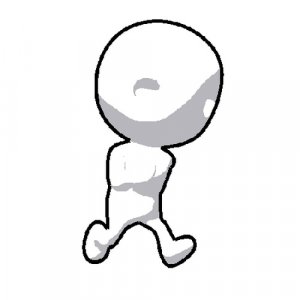
The player's job is simple to understand but tricky to master: get a stickman down a structure while controlling how fast and how wildly he falls. Holding down a button accelerates the descent. The longer you hold, the more dramatic the tumble becomes, and dramatic tumbles tend to produce higher scores. Releasing at the right moment lets you steer the trajectory slightly, which matters when stairs, cliffs, and other obstacles are in the path. The physics engine handles the rest, turning each input into bounces, flips, and slides that are hard to predict exactly.
Because the stickman interacts with the environment through a physics simulation rather than scripted animations, no two descents play out identically. A small change in when you press or release the button can send the character bouncing off a different surface or flipping into a new position. That unpredictability is the main reason to replay a stage: not just to beat a score, but to see what the simulation produces next. Stairs, cliffs, and other obstacles are the fixed parts; the stickman's reaction to them is the variable.
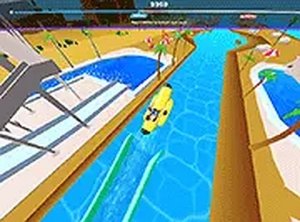
Map levels come with optional extras, including vehicles, that change how a descent unfolds. These additions layer variety onto the core hold-and-release mechanic without replacing it. They give players a reason to revisit earlier stages with a different setup, since the same structure can play out very differently depending on what is available.
Tumble Down Physics Stickman runs in a modern web browser with no download or installation. It is built for desktop play with keyboard or mouse input, and a full-screen mode is available. The visual style is minimalist: a stickman against simple backgrounds, with the physics reactions serving as the main spectacle. Sound effects emphasize the chaotic nature of each fall, and the overall tone stays lighthearted and casual. Sessions are short by design, which suits quick breaks.
Sign in to comment
You must be logged in before posting a review or rating.
No comments yet. Be the first to comment!





Editorial Notes